In the high-stakes realm of contemporary serious oversteer competition, success is no longer solely a function of raw engine power or pilot courage. Rather, it has evolved into a intricate discipline that demands a meticulous fusion of choosing a proven chassis, equipping it with the most precise drift-spec parts, and, most importantly, comprehending its real-time behavior on the track through cutting-edge drift telemetry software. This definitive manual acts as your blueprint from the very first idea of a project car right through to the final engineering-refined adjustments that transform a strong car into a consistent winner. We will examine in detail the methodical process of car suspension tuning, illustrating how a advanced drift tuning app like a dedicated telemetry system removes approximation and offers exceptional visibility into your vehicle's real-world dynamics.
The cornerstone of any successful drift machine is, indisputably, the base vehicle itself. Certain platforms have achieved legendary reputation within the international drifting community due to their inherent balance, durable build quality, and the vast availability of performance parts available. Choosing the correct platform is the initial and most significant decision a enthusiast will make. As an example, the the E36 generation BMW is universally acknowledged as perhaps the the best all-around drift cars of the modern era. Its excellent evenly distributed mass, alongside a driven rear axle configuration and extremely reliable six-cylinder powerplants, creates a platform that is at once accessible for novices and incredibly effective in the hands of a expert driver. The successor of this lineage, the BMW E46, improves on these qualities with a more sophisticated structure, wider wheel track for improved high-speed stability, and yet a greater degree of steering angle straight from the OEM. A different powerful option in the professional scene is the Chevrolet Corvette C6.
This muscle-derived track weapon brings a distinctive array of benefits to the sideways sport, including a light aluminium structure, a transaxle-style drivetrain component that helps create an perfect balance, and the colossal low-end power of a big LS-series V8 engine. This combination renders it an absolute monster on track, designed of initiating and sustaining long angles with relatively effortless use of acceleration. For drivers looking for exceptional bang-for-the-buck, the Nissan 350Z stands out as a top-tier example. It is delivered from the manufacturer with a stiff body structure, a effective original LSD, and the free-revving V6 powerplant that offers ample horsepower and torque for practicing and moving up in the sport. Its newer version, the Nissan Z34, brings further improvements in body strength, steering geometry, and overall powerplant output, cementing its place as a common selection among professional pilots. Other legendary cars that deserve mention are the agile Wankel-engined FC generation RX-7, the ubiquitous S13 Silvia/240SX, the American Ford SN95, the modern BMW E90, and the small yet incredibly fun and teachable MX-5 Miata. Every single one of these cars gives a different set of attributes, complexities, and capabilities, but they all possess the basic elements essential to become a competitive drift machine.
However, choosing the right car is only the first step. To unlock the true potential of every of these cars, major modifications to the steering and suspension systems are absolutely mandatory. This is where the world of precision aftermarket components comes into vital view. The one most game-changing improvement for a dedicated competition vehicle is the integration of a drift-spec angle modification kit. These engineered kits, for example those engineered by industry leaders like specialist manufacturers, are engineered to radically expand the vehicle's available steering angle. A OEM road car is severely limited in how far its steering tires can pivot, a safety limitation for daily operation. In oversteer driving, conversely, maximum steering input is constantly required to manage and sustain a angle. An steering kit substitutes the factory hubs, rod ends, and sometimes control arms with parts that enable the front tires to achieve angles over 70 or even 80 degs, compared to a average OEM setting of around 40 to 50 degs.
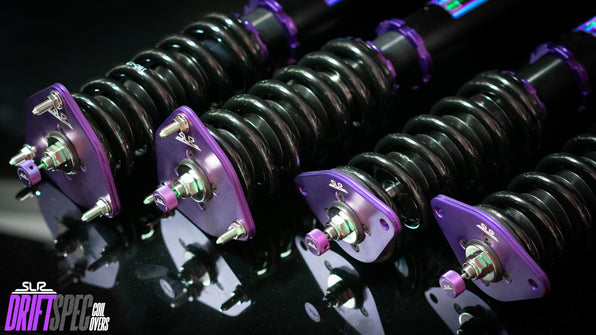
This vastly increased capability provides the pilot with significantly greater authority during a angle, making it much more straightforward to start a oversteer moment, maintain it through a sweeping bend, and switch fluidly from one direction to another. The contrast in controllability is absolutely transformative. Combined with a properly chosen modification is the every bit as critical upgrade to the chassis's spring and damper setup. Generic or including high-end road dampers are generally not engineered for the specific and brutal demands of sliding. A purpose-built pair of suspension units is paramount. These specialized suspension components feature specific piston tuning and spring stiffness that are tuned for the extreme load shifting that is inherent of aggressive driving. When a operator starts a drift, the vehicle's inertia is transferred rapidly to the outside of the turn. Correct drift-spec coilovers control this transfer in a controllable way, enabling the chassis to find its balance quickly and offering the operator precise feel through the steering wheel and driver's seat. They furthermore enable exact setting of stance, shock absorber firmness, and weight balance, which are all integral parts of optimizing the car's behavior to a particular venue or driving approach. As a system, a precision-engineered steering angle kit and a expertly selected pair of drift-spec suspension units are the absolute physical base upon which all subsequent tuning is constructed.
Once the fundamental parts is in place, the following vital phase in the development is the meticulous tuning of the vehicle's suspension geometry. This is the world of car suspension tuning, a methodology that can seem overwhelmingly complex to the uninitiated but is, in fact, the key to turning a collection of high-performance parts into a harmonious and controllable whole. The most debated parameter of tuning for drifting is undoubtedly camber angle. Wheel camber is the inclination of the rim relative to the vertical axis when viewed from the front-on of the car. If the top edge of the tire is leaning towards the chassis, this is referred to as negative camber. For drifting, inward-leaning wheels on the steering tires is widely employed and is considered necessary. The logic is intrinsically linked to tire contact.
When a chassis is going around a bend at extreme slip angles, the frame rolls toward the external of the bend. This lean forces the outer front wheel to diminish its best footprint with the track surface. By applying inward lean, the tire is pre-tilted to counteract this tilt. As the chassis tilts into the turn, the tire becomes more upright on the track, maximizing its grip at the critical time when it is most required for steering authority. Typically, front axle camber settings for a competition drift machine vary from approximately -3 degrees to as much as -5 degrees or even more, depending on the specifics of the vehicle setup, compound selection, and driver feel. The rear axle tires also use negative camber, but the angles are generally more conservative and subtler than the front axle. Overly aggressive inward lean at the back can cause the vehicle to overly prone to oversteer and challenging to control on throttle use, as it reduces the effective tire footprint of the driven wheels during forward acceleration. Thus, rear axle camber settings are frequently in the range of -1 degree to -3 degrees, finding a precise balance between giving enough cornering traction to help in starting and sustaining the slide while simultaneously preserving good grip for exiting the corner. camber angle is merely one component of the larger suspension geometry puzzle, which additionally encompasses toe setting, caster angle, and suspension-induced steering modification.
Toe describes the direction of the tires as seen from a bird's-eye view. Positive toe means the leading edges of the wheels are closer together than the rear edges, while outward toe means the reverse. For sliding, a modest amount of front axle toe-out is often employed to improve the initial steering response, making the chassis feel more responsive and eager to start a drift. Rear toe setting is usually set to neutral or a very slight amount of toe-in to foster straight-line stability under throttle. Caster is the forward or aft inclination of the suspension pivot when observed from the lateral of the car. Increased positive caster increases steering feel and high-speed solidity, and it furthermore adds to camber increase during turning, which is very advantageous. Adjusting these settings is a intricate interaction where a adjustment to one setting can and often will impact the other settings. The old-school method for dialing in a vehicle's suspension geometry for competition has historically been a tedious process of trial and error. A tuner or engineering group would apply a change based on a hunch, drive the vehicle on track, rely on the pilot's subjective sensation and comments, and then apply an additional adjustment. This cycle would continue again and again until the vehicle felt "good" or the allotted testing period ended. This approach is not just exceptionally inefficient in terms of man-hours and tires, fuel, and parts, but it is furthermore deeply flawed.
Human sensation is a notoriously subjective measurement tool, influenced by countless elements such as exhaustion, varying track conditions, weather, and merely the focus of the pilot on that specific session. What feels "oversteery" on one lap might feel "tight" on the following lap, leading to conflicting information and ineffective adjustments. This traditional problem in vehicle dynamics optimization is exactly where contemporary technology has intervened to revolutionize the landscape.
The advent and application of advanced suspension tuning applications has ushered in a completely new paradigm for building and refining professional drift machines. This new generation of tools, represented by groundbreaking systems like modern telemetry hardware, operate by actively recording the live mechanical performance of the car as it is operated on the circuit. In contrast to using driver feel, these tools gather quantifiable data on key factors such as suspension travel, corner velocities, lateral and longitudinal g-forces, wheel angle, and driver input position. This raw telemetry is then processed by sophisticated algorithms that can graph and interpret the information in a actionable manner. For the first time, tuners and builders can visualize precisely what the vehicle is performing at every millisecond of a lap. This function changes the entire suspension tuning workflow. Imagine the aforementioned task of dialing in the front camber for a given car. Instead of introducing a adjustment from -3 degrees to -3.5 degrees and then driving many runs to try and "feel" a change, a vehicle dynamics tool can give instant and irrefutable information. The software can indicate visually how the tire's loading is behaving during the critical stages of a drift: the initial flick, mid-corner, and changing direction. It can show if the present angle is allowing the loaded tire to maintain ideal loading or if the rubber is over-stressed on its external shoulder.
The tool can after analysis provide empirical suggestions for change. Perhaps the telemetry indicates that the tire is even overworking its edge at -3.5 degrees of negative camber, indicating that even more inward lean, say -4 degrees, might be warranted. Conversely, the data might reveal that the tread is not achieving drift telemetry software heat or that the inside edge is degrading excessively, which could indicate that there is overly aggressive angle and a small reduction back to -3.2 degrees would be better efficient. This degree of granularity and actionable analysis was completely unattainable in the time of pure seat-of-the-pants adjustment.
The impact of using a comprehensive suspension tuning tool reaches far beyond just setting camber. It serves as an essential damper adjustment manual that is tailored to your specific chassis. When setting the damping values on your suspension, instead of depending on imprecise advice or copying another driver's setup, you can use the telemetry to analyze how the vehicle is performing in relation to your changes. The tool can show the suspension travel trace over a section of track, highlighting if the coilovers are managing the body movement effectively or if they are allowing the car to bounce uncontrollably after a flick. It can assist in diagnosing problems like hitting the bump stops or losing droop, allowing you to make informed adjustments to preload settings, rebound/compression rates, or ride height. This process extends just as well to the complex task of car alignment tuning. In addition to camber, the system can provide data into how adjustments to toe settings and caster are affecting the vehicle's stability during different phases of a slide. For instance, it can allow you to ascertain the optimal amount of front negative toe for your individual steering rack geometry and competition style by showing the speed of turn-in response and the predictability of the car at full lock. This transforms the system an exceptionally powerful performance optimization handbook that is actively updated by the real-world performance of your personal car on the circuit. It moves the entire project from a dark art into a methodical development exercise.
Moreover, the value of a system like data acquisition is not at all restricted to experienced tuners with extensive resources. For the club-level driver, it serves as an amazing educational tool. It in essence provides the car suspension tuning builder with the insight of a full-time suspension specialist without requiring the associated cost. It drastically shortens the learning curve by providing unambiguous directions to challenges that would otherwise take seasons of trial and error to solve. A tuner can see how their individual vehicle responds to various adjustments, developing a more profound comprehension of suspension theory in the journey. It furthermore opens up professional performance tuning techniques, enabling every enthusiast with the desire to perfect their machine to do so in a structured and productive way. This is especially important in a discipline like drifting, where tuning expertise has historically been a highly secretive commodity among elite crews. Today, that power can be in the hands of any serious enthusiast.
In the final analysis, the journey to engineering and optimizing the ultimate high-performance drift machine drift telemetry software is a multi-faceted mission that smoothly integrates proven mechanical knowledge with 21st-century data technology. It starts with the wise choice of a legendary platform, followed by the application of essential performance parts like high-performance steering angle kits and properly selected competition coilovers. The build then progresses into the precision phase of alignment optimization, where parameters like negative camber, toe, and caster angle are carefully configured to suit the vehicle's upgraded geometry and the driver's individual style. The final step, and what truly distinguishes the modern process from the past, is the adoption of a powerful drift telemetry software. This system eradicates the guesswork and waste of only subjective setup by giving objective, live telemetry on how the chassis is actually performing. It serves as an indispensable suspension tuning tool, a definitive drift suspension tuning guide, and a master performance analyzer. As a complete package, this holistic approach leads to that all component of the competition vehicle—from the selection of the platform to the last tweak on the suspension—is optimized for maximum performance on the track. It represents the full evolution of the sport of drifting, bridging raw driving skill with precise chassis dynamics to build the ultimate competitive vehicles imaginable.